Embark on a rewarding journey with your new incubator! This guide, and the accompanying PDF manual, unlocks a world of possibilities for successful hatching, ensuring optimal performance․
What is an Egg Incubator?
An egg incubator is a device replicating natural egg-warming conditions, crucial for avian reproduction outside of a mother bird․ These machines meticulously control temperature and humidity, vital for embryo development․ Modern incubators, detailed in your PDF manual, often include automated features like egg turning․ Understanding its function, as outlined in the user guide, is the first step towards successful hatching, offering a controlled environment for optimal results․
Why Use a User Manual (PDF)?
A PDF user manual is your essential guide to maximizing incubator performance․ It provides step-by-step instructions for setup, operation, and maintenance, specific to your model – like the Hethya Egg Incubator Manual․ Ignoring it risks improper settings, impacting hatch rates․ The manual details troubleshooting, safety precautions, and ensures you fully utilize features, guaranteeing a successful and rewarding hatching experience․

Types of Egg Incubators
Explore diverse incubator designs – forced-air, still-air, and those with automatic or manual turning․ Your user manual details the specifics of your incubator type․
Forced-Air Incubators
Forced-air incubators utilize a fan to circulate warm air, creating consistent temperatures throughout the chamber․ This eliminates “hot spots” common in still-air models, promoting even development․
Your incubator’s PDF manual will detail specific fan operation, ventilation adjustments, and optimal egg placement for maximum efficiency․ Understanding these nuances, as outlined in the manual, is crucial for successful hatches with forced-air systems․
Still-Air Incubators
Still-air incubators rely on natural convection for heat distribution, meaning warmer air rises and cooler air descends․ This creates temperature gradients, requiring careful egg placement – typically near the heat source, but not directly on it․
Consult your incubator’s PDF manual for precise temperature guidelines and recommended egg arrangement․ The manual will detail how to mitigate temperature variations for optimal hatching success in a still-air environment․
Automatic Egg Turners vs․ Manual Turning
Incubators offer automatic egg turners, simplifying the process compared to manual rotation․ Your PDF manual will detail the automatic turner’s operation, including frequency and angle of rotation, crucial for embryo development․
If manually turning, the manual specifies the frequency (typically several times daily) and method to avoid damage․ Consistent turning prevents the yolk from sticking, ensuring healthy chick formation․

Understanding Your Incubator’s Components
Your incubator’s PDF manual details each part – temperature, humidity, turning, and ventilation systems – essential for successful hatching and optimal embryo development․
Temperature Control System
The PDF manual meticulously explains your incubator’s temperature regulation․ Precise temperature is paramount; deviations impact embryo viability․ Understand the thermostat’s function, sensor location, and calibration procedures detailed within․
Consistent monitoring, as outlined in the manual, is crucial․ Learn to interpret temperature readings and make necessary adjustments for optimal hatching success․ Automated systems, if present, require specific manual configuration․
Humidity Control System
Your incubator’s PDF manual details the humidity control system’s operation․ Maintaining correct humidity levels is vital for proper embryonic development and successful hatching․ The manual will guide you through water reservoir filling, ventilation adjustments, and humidity monitoring techniques․
Learn to recognize signs of insufficient or excessive humidity and how to rectify them, ensuring optimal conditions throughout the incubation period․
Egg Turning Mechanism
Refer to your incubator’s PDF manual for detailed instructions on the egg turning mechanism․ It explains whether you have an automatic turner or require manual rotation․ The manual outlines the correct turning angle, frequency, and schedule crucial for preventing embryos from sticking to the shell membrane․
Understanding this system, as detailed in the guide, is key to maximizing hatch rates․
Ventilation System
Your incubator’s PDF manual provides crucial details about its ventilation system․ Proper airflow is essential for oxygen supply and carbon dioxide removal, impacting embryo development․ The manual will specify vent adjustments needed throughout incubation, based on humidity levels and incubator type․
Follow these guidelines carefully, as outlined in the user guide, to ensure optimal gas exchange․

Setting Up Your Incubator (Based on PDF Manuals)
Consult your incubator’s PDF manual for detailed setup instructions․ Proper preparation, following the guide, is vital for successful incubation and healthy hatch rates․
Initial Cleaning and Disinfection
Before first use, thoroughly clean and disinfect your incubator, as detailed in the PDF manual․ This crucial step eliminates harmful bacteria and contaminants․ Use a poultry-safe disinfectant, ensuring complete rinsing and drying․ Pay close attention to all surfaces – trays, walls, and the water reservoir․ A clean incubator promotes a healthy environment for developing embryos, maximizing hatchability and chick vitality․ Refer to the manual for specific disinfectant recommendations and safety precautions․
Calibration of Temperature and Humidity
Accurate calibration is paramount for successful incubation; consult your incubator’s PDF manual for precise instructions․ Use a calibrated thermometer and hygrometer to verify readings against the incubator’s display․ Adjust settings as needed, allowing time for stabilization․ Consistent temperature and humidity levels are vital for embryo development․ Regular calibration, as outlined in the manual, ensures optimal hatching rates and healthy chicks․
Water Reservoir Setup
Proper hydration is crucial; your incubator’s PDF manual details specific water reservoir setup procedures․ Typically, this involves filling the designated reservoirs to the indicated levels, ensuring consistent humidity․ Regularly check and replenish water, as evaporation occurs during incubation․ Some models feature automatic water systems – refer to the manual for operation․ Maintaining correct humidity prevents dehydration and supports healthy embryo development․

Incubation Process – A Step-by-Step Guide
Follow your incubator’s PDF manual for precise instructions on egg incubation․ It details temperature, humidity, and turning schedules for optimal hatch rates and success․
Egg Selection and Preparation
Your incubator’s PDF manual provides crucial guidance on selecting fertile eggs for incubation․ Prioritize clean, uncracked eggs from healthy flocks․ Proper preparation, as detailed in the manual, involves gentle cleaning to remove debris without eliminating the protective bloom․
Avoid washing unless absolutely necessary, as this can reduce hatching success․ Store eggs pointed-end down and at a consistent, cool temperature before placing them in the incubator, following the manual’s specific recommendations․
Incubation Temperature & Humidity Chart (Common Values)
Refer to your incubator’s PDF manual for precise temperature and humidity settings, as these vary by species․ Generally, chicken eggs require 99․5°F (37․5°C) and 50-65% humidity during the first 18 days․
Humidity increases to 65-75% during lockdown (the last 3 days)․ The manual will detail adjustments needed based on incubator type and egg quantity, ensuring optimal embryonic development․
Egg Turning Schedule
Consult your incubator’s PDF manual for the recommended egg turning schedule․ Typically, eggs require turning an odd number of times – at least three, but ideally five – per day․
Automatic turners handle this, but manual turning demands consistency․ The manual will specify angles and timing, crucial for preventing the yolk from sticking and ensuring healthy embryo development․

Candling Eggs
Your incubator’s PDF manual details candling procedures․ This process, using a bright light, reveals embryo development, identifying fertile versus infertile eggs for removal․
When to Candle
Consult your incubator’s PDF manual for precise timing, but generally, the first candling should occur around day 7-10 of incubation․ A second check, around day 14, confirms continued development․
Candling too early may be inconclusive, while waiting too long risks disturbing a developed embryo․ The manual provides species-specific guidance, as incubation periods vary․ Proper timing, as outlined in the PDF, maximizes accuracy and minimizes potential harm to the developing chicks․
What to Look For During Candling
Refer to your incubator’s PDF manual for visual aids, but a fertile egg will display visible veins radiating from a dark spot – the developing embryo․
A clear egg indicates infertility, while blood rings suggest early embryonic death․ Consistent, dark spots without veins also mean the egg is not viable․ The manual details expected development stages at each candling point, aiding accurate assessment and removal of infertile eggs․
Hatching Process
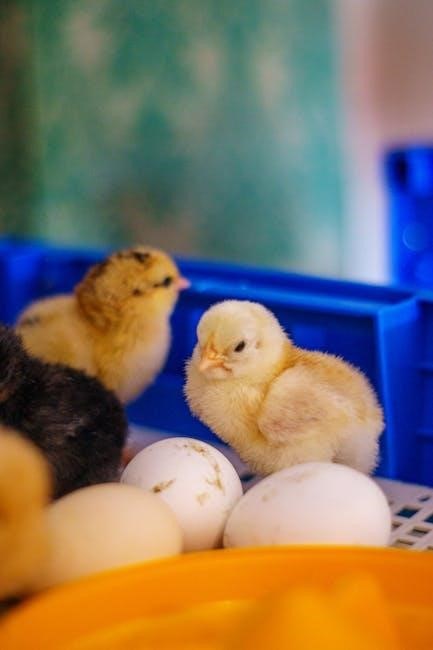
Consult your incubator’s PDF manual for precise lockdown instructions and humidity adjustments crucial for successful hatching and chick emergence․
Lockdown Period
The incubator’s PDF manual details the critical lockdown phase, typically beginning 3-7 days before the expected hatch date․ Stop egg turning during this period, and increase humidity to prevent membranes from drying․ Avoid opening the incubator unless absolutely necessary, as fluctuations can harm developing chicks․ Your manual will specify precise humidity levels and temperature adjustments for optimal hatching success, ensuring a healthy and vibrant brood․
Maintaining Humidity During Hatching
Your incubator’s PDF manual emphasizes consistent humidity during hatching․ Typically, humidity should be increased to 65-75% to prevent chicks from sticking to shell membranes․ Refer to your manual for specific recommendations based on your model․ Adding warm water to the reservoir is a common method, but avoid direct contact with eggs․ Proper humidity ensures successful pipping and hatching, yielding healthy chicks․
Post-Hatch Care
Consult your incubator’s PDF manual for detailed post-hatch guidance․ Allow chicks to dry completely within the incubator before transferring them to a brooder; Maintain a warm, draft-free environment with appropriate food and water․ The manual will specify optimal brooder temperatures and humidity levels for newly hatched chicks, ensuring their healthy development and minimizing stress․
Troubleshooting Common Issues
Refer to your incubator’s PDF manual for solutions to temperature fluctuations, humidity problems, and egg turning malfunctions – ensuring successful hatches!
Temperature Fluctuations
Consult your incubator’s PDF manual immediately if you notice temperature swings․ These fluctuations can severely impact hatch rates․ The manual details proper calibration procedures and troubleshooting steps, like checking the thermostat and heating element․
Ensure the incubator is placed away from drafts and direct sunlight, as these external factors contribute to instability․ Consistent temperature is crucial; the manual provides guidance on maintaining optimal levels throughout the incubation period․
Humidity Problems
Refer to your incubator’s PDF manual for specific humidity troubleshooting․ Too little humidity leads to excessive weight loss in eggs, while too much can hinder proper development․ The manual will explain how to adjust water levels in the reservoir and ventilation settings․
Regularly check the hygrometer’s accuracy, as indicated in the manual, and ensure proper airflow․ Maintaining correct humidity is vital for successful hatching; the manual provides detailed charts․
Egg Turning Malfunctions
Consult your incubator’s PDF manual immediately if the egg turning mechanism fails․ The manual details troubleshooting steps, like checking power connections and ensuring the motor isn’t obstructed․ Manual turning may be necessary; the manual outlines the correct frequency․
Inspect the turning racks for damage, as described in the manual, and avoid overloading the incubator․ Consistent turning is crucial; the manual emphasizes its importance for embryo development․
Maintenance and Cleaning
Refer to your incubator’s PDF manual for detailed cleaning schedules and disinfection procedures․ Regular upkeep, as outlined, ensures optimal performance and longevity․
Regular Cleaning Schedule
Consult your incubator’s PDF manual for a tailored cleaning schedule, but generally, daily wipe-downs of interior surfaces are crucial during incubation; After each hatch, a thorough disinfection is essential, utilizing incubator-safe solutions․ Remove all debris, including shell fragments and membranes․ Pay close attention to the water reservoir, cleaning it meticulously to prevent bacterial growth․ Following the manual’s guidance ensures a hygienic environment for optimal hatch rates and chick health, extending the incubator’s lifespan․
Long-Term Storage
Refer to your incubator’s PDF manual for specific long-term storage instructions․ Before storing, ensure the unit is completely dry to prevent mold․ Clean and disinfect all components thoroughly․ Store in a cool, dry place, protected from dust and extreme temperatures․ Disconnect the power supply and consider covering the incubator to shield it from damage․ Following these steps, guided by the manual, preserves functionality for future use․

Safety Precautions
Always consult your incubator’s PDF manual for crucial safety guidelines․ Prioritize electrical safety and careful handling of components to prevent hazards during operation․
Electrical Safety
Refer to your incubator’s PDF manual for detailed electrical safety instructions․ Ensure the incubator is properly grounded and connected to a compatible power source․ Never operate with a damaged cord or plug, and avoid using extension cords if possible․ Disconnect the incubator from power before cleaning or performing maintenance․ Protect the unit from moisture to prevent electrical shock, and always follow the manufacturer’s specific warnings regarding electrical hazards detailed within the provided documentation․
Handling of Incubator Components
Consult your incubator’s PDF manual for safe component handling guidelines․ Avoid forceful manipulation of delicate parts like sensors or turning mechanisms․ When cleaning, use recommended solutions and soft cloths – harsh chemicals can cause damage․ Exercise caution when handling the heating element, allowing it to cool completely before any maintenance․ Proper handling, as outlined in the manual, ensures longevity and optimal performance of your incubator․

Finding and Utilizing PDF Manuals Online
Locate your incubator’s PDF manual easily on the manufacturer’s website or through online retailers; these resources provide crucial setup and operational guidance․
Manufacturer Websites
Directly accessing the manufacturer’s website is often the most reliable method for obtaining the correct PDF manual for your specific egg incubator model․ These sites typically have dedicated support sections or downloadable resources, ensuring you receive the latest version with accurate information․
Look for a “Support,” “Downloads,” or “Manuals” area․ Searching by model number will quickly pinpoint the relevant PDF, offering detailed instructions for setup, operation, troubleshooting, and maintenance – vital for successful hatching․
Online Retailer Resources
Many online retailers that sell egg incubators also provide access to PDF manuals directly on their product pages․ Check the “Specifications” or “Support” tabs; often, a downloadable link is conveniently located there․ This is a quick way to find documentation if you don’t immediately locate the manufacturer’s site․
Retailer-provided PDFs can be especially useful for older models or when the manufacturer’s website is difficult to navigate, offering a readily available resource for setup and operation․
Advanced Features (Petersimes OvoScan Example)
Petersimes OvoScan automates egg shell temperature measurement and adapts incubation without opening, as detailed in the PDF manual for precise control․
Automated Egg Shell Temperature Measurement
Petersimes OvoScan, as explained within the incubator’s PDF manual, revolutionizes temperature control by automatically and precisely measuring egg shell temperature․ This eliminates the need for manual checks and potential inaccuracies․ The system performs calculations and adapts incubation parameters, maintaining optimal conditions without requiring hatchery staff to open the incubator, preserving a stable environment crucial for successful hatching․
Data Logging and Analysis
The PDF manual details how advanced systems like Petersimes OvoScan offer comprehensive data logging and analysis capabilities․ This feature meticulously records crucial incubation parameters, providing valuable insights into performance․ Users can analyze trends, identify potential issues, and optimize settings for future hatches, ultimately improving overall hatchery efficiency and maximizing successful chick yields, as described in the user guide․